
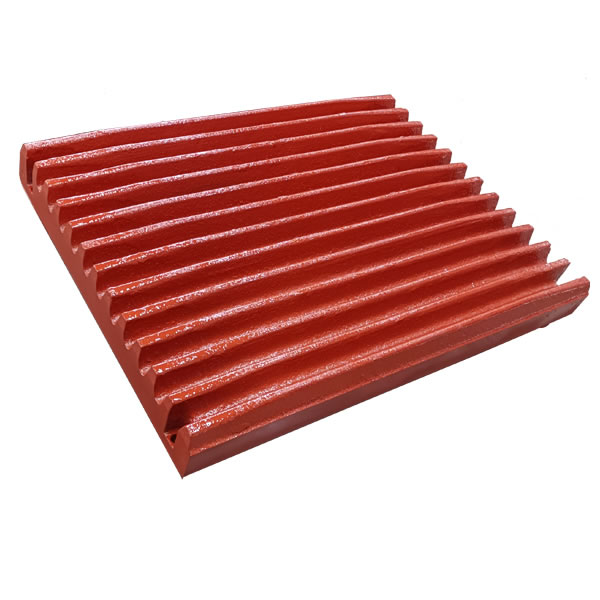
A buyer may know the crusher model and still not know the exact wear part fitted to the machine. The same model family can contain serial changes, chamber options, regional variants and previous modifications. That is why a model name is useful for searching, but it is not a fitment release.
The practical answer is to build a short evidence chain before asking a foundry to quote. Begin with the strongest reference you have, record the installation context, and separate two decisions that are often mixed together: does the part fit, and is the proposed material suitable for the duty?
Use the strongest available identification evidence
The most reliable starting points are not equal. Use them in this order where possible:
- Controlled part number and machine serial range. Record the number exactly as shown in the parts book, drawing or previous order. Include prefixes, suffixes and revision identifiers.
- Approved drawing. The drawing should show revision, datums, mating interfaces, tolerances and inspection points. A screenshot without scale or revision control is weaker evidence.
- Identified physical sample. Confirm which machine and position the sample came from. Protect the remaining seating faces and record where material has been lost through wear.
- Verified critical dimensions. Use an oriented measurement sheet or annotated photographs. State the measuring method and units.
- Photographs for screening. Photos help identify the part family and failure pattern, but they rarely prove every interface dimension by themselves.
If two sources disagree, stop and resolve the discrepancy. Combining an old drawing with a sample from a modified machine can create more risk than using either source alone.
Record the machine and installation context
Part identification becomes faster when the evidence is tied to a specific assembly. Send the following information together:
- equipment manufacturer and model;
- machine serial number or serial range;
- part name and installation position;
- current part number and any superseded number;
- left-hand, right-hand, upper, lower, fixed or moving orientation;
- quantity installed per machine and quantity required;
- photographs showing the part in place before removal;
- adjacent components that locate, clamp or support the part.
For a jaw crusher, for example, a request for a “jaw plate” should state whether the part is the fixed jaw plate or the movable jaw plate. For an impact crusher, a side liner, blow bar and impact apron occupy different interfaces even when a casual photo makes them look like similar wear plates.
Make photographs measurable, not merely recognizable
A useful photo set answers three questions: what is the part, how is it oriented, and which surfaces control fitment?
- Photograph the complete part from front, back and side.
- Add one image showing the part installed or clearly mark its installed orientation.
- Include a scale only when it lies in the same plane as the feature being measured.
- Mark bolt-hole centres, seating faces, tapers, radii and thickness reference points.
- Show casting marks and part numbers separately at close range.
- Do not hide damage. Cracks, edge loss and unusual wear may change the material or inspection discussion.
A tape measure across a perspective image is useful for screening, but it is not a substitute for a controlled dimensional record where the interface is critical.
Keep fitment review separate from material selection
Correct geometry does not automatically mean correct service performance. Once the part identity is stable, the material route must be reviewed against operating conditions.
Useful duty information includes feed material, maximum feed size, impact level, abrasiveness, moisture, throughput, crusher setting, current alloy, wear pattern and failure mode. State whether the existing part wore evenly, cracked, deformed, loosened, lost inserts or damaged an adjacent component.
Grade names such as Mn13Cr2, Mn18Cr2, high-chrome iron or martensitic steel are starting points. The quotation and purchase specification should define the agreed chemistry, heat treatment, hardness, inspection and traceability scope for the actual part.
Send a quotation package that can be checked
Before submission, use this compact checklist:
| Evidence group | Minimum useful information |
|---|---|
| Machine | Make, model, serial range and installation position |
| Part identity | Part number, drawing revision or identified sample |
| Geometry | Critical dimensions, datums and mating interfaces |
| Duty | Feed, impact, abrasion, current material and failure pattern |
| Commercial scope | Quantity, destination, required date and Incoterm preference |
| Documents | Required chemistry, hardness, dimensional, NDT or traceability records |
The supplier should then distinguish confirmed facts from open assumptions. A technically responsible quotation may ask for more evidence before fixing the pattern, alloy or machining route. That is a risk-control step, not a delay tactic.
The shortest route to a usable quotation
Start with the model, but do not stop there. Attach the best controlled reference available, show the installation position, record the critical interfaces and explain the operating duty. This gives engineering enough information to decide what is known, what must be verified and what can be quoted without guessing.
You can submit the machine reference, part number, drawing or worn-part photographs through the technical quotation form.