
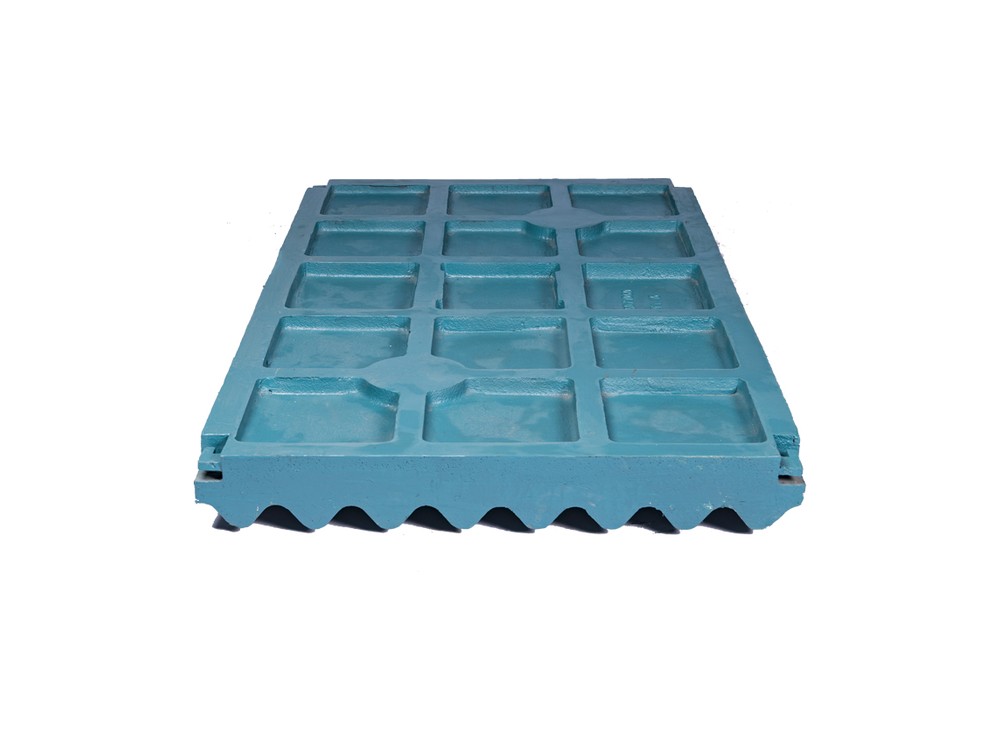
Jaw plate discussions often begin with one question: “Should we use Mn13Cr2, Mn18Cr2 or Mn22Cr2?” The problem is that the grade name describes only one part of the decision. A jaw plate can wear too quickly because the alloy is poorly matched to the duty, but it can also fail because of profile, fitment, heat treatment, casting integrity, feed conditions or an operating change.
The useful question is therefore not which grade is highest. It is which material and process route fits the actual jaw plate geometry, impact level, abrasion and observed failure mode.
Start with the current part, not the candidate grade
Before changing material, document the present baseline. A comparison without a baseline can turn normal operating variation into a false material conclusion.
Record:
- fixed and moving jaw plate part numbers;
- current material specification and available certificates;
- new and removed weights, if practical;
- campaign dates, processed tonnage or operating hours;
- feed type, top size, moisture and visible contamination;
- closed-side setting and any significant setting changes;
- wear distribution from top to bottom and across the plate;
- cracks, deformation, loose seating, bolt problems or local edge loss;
- whether fixed and moving plates were changed as a matched set.
Photograph the complete worn profile. A close-up of the hardest-worn tooth is useful, but it does not show whether the chamber loaded evenly or whether one area stopped doing useful crushing work.
What the common manganese routes mean in practice
Mn13Cr2, Mn18Cr2 and Mn22Cr2 are widely used labels for manganese-steel routes with different nominal manganese levels and chromium additions. They should be treated as candidate families, not universal performance rankings.
Mn13Cr2 can suit duties that develop useful work hardening
Mn13Cr2 is often reviewed where impact is sufficient to work-harden the wearing surface and the service does not require a higher-manganese route. It may be a practical baseline for general crushing duties, but suitability still depends on feed, geometry and section size.
If the worn surface shows limited work hardening or rapid abrasive loss, the first response should not automatically be a higher grade. Check whether the feed and chamber actually generate enough compressive loading, and whether the profile maintains effective nip and material flow.
Mn18Cr2 provides a different work-hardening candidate
Mn18Cr2 may be considered where the duty combines substantial impact with abrasion and where the component can develop the intended hardened surface. It is not a correction for every wear problem. A plate that is loose, poorly seated or exposed to uneven feed can still fail regardless of nominal manganese level.
Mn22Cr2 is not an automatic upgrade
Mn22Cr2 is a higher-manganese candidate for selected severe duties. Its value depends on whether the operating conditions, section geometry and process control support the intended behaviour. A higher material cost without a controlled comparison can increase cost per tonne rather than reduce it.
For all three routes, the purchase specification should define the accepted chemical range, heat treatment, hardness or mechanical-property records, dimensional controls and traceability required for the order.
Separate wear loss from mechanical failure
Material selection follows different logic depending on how the existing plate reaches end of life.
| Observation | Questions to investigate before changing grade |
|---|---|
| Even profile loss | Is campaign tonnage known, and did feed and setting remain comparable? |
| Heavy wear in one zone | Is feed distribution uneven, or is the chamber profile mismatched? |
| Cracking | Where did the crack start, and were seating, tightening, casting integrity and tramp events reviewed? |
| Plastic deformation | Was the loading abnormal, and do geometry and support conditions match the drawing? |
| Loose plate or fretted seat | Are wedges, seats, backing and mating surfaces within specification? |
| Poor tooth shape before mass is consumed | Does the profile lose crushing function before the nominal wear allowance is used? |
An alloy change cannot repair an incorrect interface. Verify fixed jaw plate and movable jaw plate fitment, clamping and mating geometry before attributing the problem to chemistry.
Use a controlled trial instead of a grade-name comparison
A useful trial changes one main variable while recording the operating context. Define the comparison before installation:
- Confirm that the trial and baseline parts have equivalent fitment and usable profile.
- Record the accepted material and inspection documents for both.
- Weigh or dimension the parts at agreed reference points where practical.
- Record feed, setting, throughput, interruptions and abnormal events during each campaign.
- Compare service life, processed tonnes, remaining profile and failure mode.
- Calculate component cost per tonne, then review downtime and change-out effects separately.
Do not combine results from different machines without explaining the difference in chamber, feed and duty. The purpose of the trial is to reduce uncertainty, not to produce a headline wear-life multiple.
A better jaw plate specification starts with evidence
The material grade belongs in the specification, but it should not be the whole specification. A defensible jaw plate review connects verified geometry with operating duty, current wear evidence, a controlled material route and an agreed inspection plan.
For a technical review, send the jaw plate reference, crusher model and serial range, current grade, worn-profile photographs, feed description, setting, quantity and required documents through the quotation form.