Products

Roller Press Spare Parts

Four core wear parts. The studded roller surface is the highest-barrier product in cement grinding — one lost pin destroys the roller within 3 months.

Relevant RFQs include HPGR studded rolls, roller press roller tyres, side wear plates, cheek plates, scraper blades and feed chute liners for cement grinding circuits.

#1 Roller Press Part

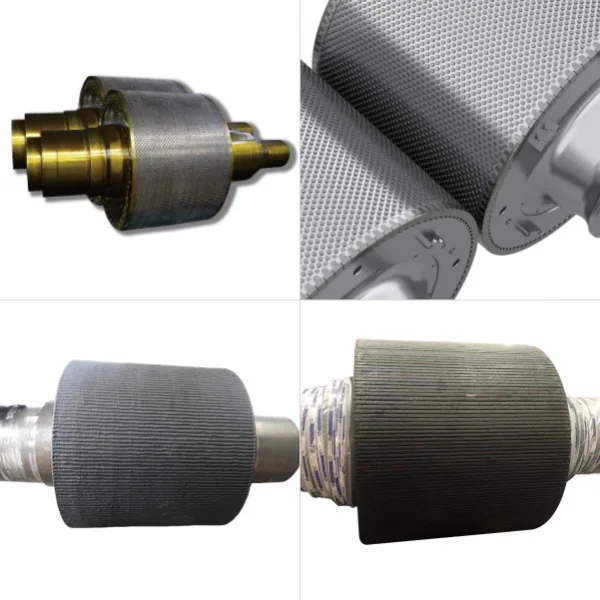
Roller Press Roller Tyres / Studded Rolls

Roller Press Roller Tyres / Studded Rolls — roller press and HPGR wear parts for cement grinding, slag grinding and mining applications. OEM-compatible supply, custom casting and machining, material certificates included.

The roll surface that does the work. Three configurations: studded (tungsten-carbide pins metallurgically bonded into a Cr-Mo base ring — the highest-barrier product in cement finish grinding); hardfaced (Cr-Mo forged ring with periodic weld overlay — rebuildable 5–8 times); monobloc Cr-Mo casting (for mining HPGR). One lost stud triggers a chain reaction that destroys 4–6 neighbors within weeks. Stud retention is the #1 quality metric for studded rollers.

Studded WC+CrMo Hardfaced (Rebuild) Monobloc Cr-Mo Cast
Configuration
Studded / Hardfaced / Monobloc
Base material
Cr-Mo alloy / Cr-Mo forged
Gap Seal

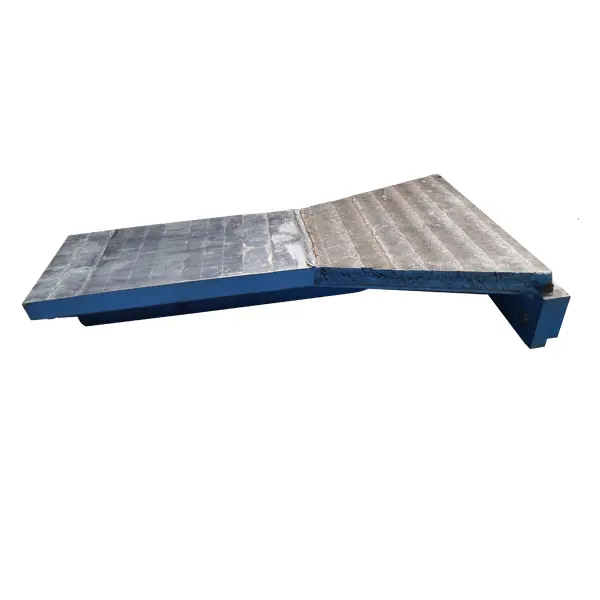
Roller Press Side Wear Plates / Cheek Plates

Roller Press Side Wear Plates / Cheek Plates — roller press and HPGR wear parts for cement grinding, slag grinding and mining applications. OEM-compatible supply, custom casting and machining, material certificates included.

Seals the gap between the rollers and the machine frame. Hardox 500 (cement) or Cr26+ceramic insert (HPGR). Material bypass through worn plates drops grinding pressure and roller efficiency by 15–30%. Replace alongside every roller maintenance interval — the invisible cost driver in roller press operation.

Hardox 500 Cr26 HB400 + Ceramic
Material
Hardox 500 / Cr26 / HB400+ceramic
Hardness
HB 500 / HRC 58–62 / 70+ HRC
Stud Protection

Roller Press Scraper Blades / Cleaning Scrapers

Roller Press Scraper Blades / Cleaning Scrapers — roller press and HPGR wear parts for cement grinding, slag grinding and mining applications. OEM-compatible supply, custom casting and machining, material certificates included.

Keeps the roller surface clean during operation. Tungsten carbide tip metallurgically bonded to a Hardox base plate. Segmented design for individual segment replacement (no full-blade change-out). superior wear resistance compared to hardened steel. Worn scrapers cause material buildup, hot spots, and ultimately stud loss.

Tungsten Carbide Tip Segmented Design Hardox Base
Material
WC tip + Hardox base
Hardness
WC HV 1,800+ / Hardox HB 450
Feed Distribution

Roller Press Feed Chute & Hopper Liners

Roller Press Feed Chute & Hopper Liners — roller press and HPGR wear parts for cement grinding, slag grinding and mining applications. OEM-compatible supply, custom casting and machining, material certificates included.

Distributes feed evenly across the roller width. HB400 for low-wear positions, Hardox 450 for moderate wear, Cr26 overlay for severe wear. Uneven feed across roller width is the #1 cause of uneven roller wear and 50% roller life reduction. Custom-fabricated per installation geometry.

HB400 Hardox 450 Cr26 Overlay
Material
HB400 / Hardox 450 / Cr26 overlay
Hardness
HB 400–450 / HRC 58–62
Compatibility

Supported Crusher Brands & Models

Click a brand to see all supported models. Every part is reverse-engineered to OEM specifications.

FLSmidth Full Range

HRC (Hydraulic Roller Press)

HRC 800HRC 1000HRC 1200HRC 1400HRC 1600HRC 1800HRC 2000

Polycom (Legacy)

Polycom 10/6Polycom 12/8Polycom 14/10Polycom 16/12Polycom 18/14Polycom 20/16Polycom 24/20
KHD Humboldt Wedag Full Range

Polycom Roller Press

Polycom 6/4Polycom 8/5Polycom 10/6Polycom 12/8Polycom 14/10Polycom 16/12Polycom 18/14Polycom 20/16Polycom 24/20
Koppern / Maschinenfabrik Koppern Full Range

HPGR Series

HPGR 600HPGR 800HPGR 1000HPGR 1200HPGR 1400HPGR 1600HPGR 1800

Roller Press Legacy

RP 8RP 10RP 12RP 14RP 16RP 18RP 20RP 24
ThyssenKrupp / Polysius Full Range

QUADROPOL Roller Press

QRP 20/13QRP 22/15QRP 24/17QRP 26/19QRP 28/21QRP 30/23
Metso / Outotec Full Range

HRC Pro

HRC Pro 800HRC Pro 1000HRC Pro 1200HRC Pro 1400

HRCD

HRCD 800HRCD 1000HRCD 1200HRCD 1400
Chinese OEM (CITIC / Sinoma / Hefei / Chengdu) Full Range

CITIC GYP

GYP 800GYP 1000GYP 1200GYP 1400GYP 1600

Sinoma CLM

CLM 90CLM 110CLM 120CLM 140CLM 160CLM 200

Hefei ZLB

ZLB 80ZLB 100ZLB 120ZLB 140ZLB 160

Chengdu HIT

HIT-RP 80HIT-RP 100HIT-RP 120HIT-RP 140HIT-RP 160
Material Guide

Which Configuration for Your Application?

Roller press wear economics are dominated by stud retention and rebuild cycle count. Choose the right configuration for your feed material and grinding circuit.

A. Roller Tyre Configuration Decision

ConfigurationApplicationBase MaterialSurfaceMaintenanceTypical LifeRelative Cost
StuddedCement finish grindingCr-Mo alloy steelWC-Co pins (HV 1,400+)Pin replacement, not full rebuildApplication-dependentHighest barrier / value
HardfacedCement raw / slag grindingCr-Mo forged ringPeriodic hardfacing weld overlayRebuild cycles based on wearApplication-dependentLowest lifetime cost
Monobloc CastMining HPGR (Cu/Au/Fe)Cr-Mo / Ni-Hard 4As-cast or machined profileReplace when past rebuild limitApplication-dependentMedium

B. Ancillary Parts Material Guide

PartGradeHardnessTypical LifeFailure Consequence If Ignored
Side Wear Plates (cement)Hardox 500 / Cr26HB 500 / HRC 58–62Application-dependent15–30% efficiency loss
Side Wear Plates (HPGR)Cr26 + Ceramic insertHRC 58–62 / 70+Application-dependentRapid edge wear, roller damage
Scraper BladesWC insert + Hardox baseWC HV 1,800+Application-dependentStud loss / hot spots on roller
Feed Chute LinersHB400 / Hardox 450HB 400–450Application-dependentUneven roller wear = 50% life reduction

Three Rules for Roller Press Wear Economics

① One lost stud triggers a chain reaction. When one WC pin detaches, material gets trapped in the void, scouring the Cr-Mo base around neighboring pins. Within weeks, 4\u20136 adjacent pins follow. Within 3 months, the roller surface is ruined. Stud retention is the #1 quality metric.

② Side wear plates are the invisible cost driver. When cheek plates wear, material bypasses the roller gap. Grinding pressure drops, roller efficiency falls 15\u201330%, and the entire grinding circuit throughput suffers. Replace cheek plates alongside every roller maintenance interval.

③ Hardfaced rollers are rebuildable \u2014 but only if the base ring is sound. Quality Cr-Mo forged base rings survive 5\u20138 rebuild cycles before fatigue cracks appear. A poor base ring fails in 2\u20133 cycles. The base ring casting quality determines the lifetime economics of a hardfaced roller system.

Why choose ZL Crusher Parts

Foundry-direct. No middleman.

30+ years casting experience. 18,000-ton annual capacity. Every part engineered, poured, heat-treated, machined, and QC-checked in our own Luoyang plant. No outsourcing, no sub-contracting. ISO 9001:2015.

9-step QC. Full traceability.

Spectrometer → metallurgical microscope → impact tester → tensile machine → hardness tester → 3D scanner → ultrasonic → magnetic particle → portable spectrometer. Every inspection report ships with your order.

Global. Trusted by industry leaders.

Exported to 37+ countries across four global regions. Supplying CEMEX, LafargeHolcim, Heidelberg Cement, TATA Steel and POSCO. Official Hardox® Wear Parts Center since 2017.

FAQ

Frequently Asked Questions

Studded, hardfaced, or monobloc — which roller tyre?
Studded (WC pins in Cr-Mo base): highest-barrier product, best for cement finish grinding where maximum surface life justifies the premium. Hardfaced: rebuildable (5–8 cycles on quality base ring), lowest lifetime cost for cement raw and slag grinding. Monobloc cast: simplest design, best for mining HPGR (Cu/Au/Fe) where throughput dominates over surface life.
One lost stud — how quickly does damage spread?
Within weeks, a single lost WC pin creates a void where material packs and scours the base ring around 4–6 adjacent pins. Within 3 months, the entire roller surface is compromised. Stud retention is the #1 quality metric — metallurgical bonding of WC pins to the Cr-Mo base ring is the critical manufacturing step.
How often should I replace side wear plates?
Replace side wear plates alongside every roller maintenance interval. Worn plates allow material bypass that drops grinding pressure and roller efficiency by 15–30%. The entire grinding circuit throughput suffers — the energy penalty alone typically exceeds the replacement cost of the plates.
Uneven roller wear — what's the #1 cause?
Uneven feed distribution across the roller width. Inspect and replace feed chute liners as part of every roller maintenance cycle. Worn or misaligned chute liners channel feed to one side of the roller, creating localized high-pressure zones and uneven surface degradation.

Explore other product lines

Don't see your part?

Every casting starts with your drawing. If the machine exists, we can make the part — regardless of brand, model, or age.

Send Your Drawing
Catalogue